• The 60 Second Leader
  • Seven Secrets of Inspired Leaders
  • The Little Book of Leadership
  • Leadership Hub for Corporates
  • Learning to Live with Huntington's Disease
 

Phil's Leadership blog

DON’T PREDICT THE FUTURE; SEE THE PRESENT

Too much writing about leadership and innovation says it is about predicting, forecasting, inventing the future. No, it’s not. It’s about understanding the present more deeply than your competitors do. Gary Hamel explained it to me in an interview once:

“People who innovate successfully are not forecasters. They are in touch with what’s happening, whereas the competition simply haven’t noticed. People who innovate successfully don’t see the future. They see beneath the surface of the present. And they pull together what they see into a proposition that has instant appeal for customers, but which customers didn’t even know they wanted until it appeared.

“How do you do this? Nokia are a great example. Twenty years ago the top people at Nokia got together in a cold room just outside the Arctic Circle and decided they were going to beat Motorola. Very funny. Motorola was and still is one of the most respected companies in the world, up there with GE.

Nokia succeeded because they saw what was changing and exploited it. There are three steps to doing this:

1. Find the fringe
2. Look for the pattern
3. Data is not enough: Experience, feel and understand what’s happening.

It’s at the margin that you notice change happening first. Nokia sent its engineers from Finland and told them to live in places where exciting things were happening. They sent them to spend time in nightclubs in Tokyo, in the King’s Road in London, on Venice Beach in southern California.

Their brief was to observe marginal trend-setting lifestyles and blend in, then report back. It was that experiential learning, getting under the skin of the ‘now’ by actually living it rather than conducting a questionnaire, that brought Nokia’s engineers back to Finland with an emphasis on aesthetics and design and on more elegant, user-friendly interfaces. And that was how they did, indeed, beat Motorola in the phone handset market.”

Source: My notes from an interview I did with Gary Hamel a while back.


I’m a Curator. Don’t get me out of here.

I’ve been learning what works and what doesn’t in new-style Communities of Practice, using Facebook-type tools where the members write the content. More precisely, the content kind of falls out of conversations they have with each other. They ask each other questions, compare their practices, and hundreds of other community members feed off the answers.

These ‘feeders’ are commonly called ‘lurkers’, which is as disparaging as well, er, ‘feeders’, I suppose, so I have to stop using ‘feeders’ and think of….’learners’, There. That’s better.

The most effective form of learning is in fact teaching what we think we know and then learning from people who are the formal learners – adapting our thoughts with the help of their feedback – or who are our peers…in fact, anyone.

But, most ‘learners’ think of it as a passive Hoovering up process. Conversations generate insights and share practices, but the outcome isn’t knowable in advance: it emerges.

Anyway, I digress. I thought my role with the community of practice I have built, www.TheLeadershipHub.com , was to pump prime it, bring people together, throw in some themes, then get out of the way to see what emerges from their conversations.

The danger of blog-type communities (and the underlying technology is basically blog technology) is that they can revolve too much around one person. I wanted to keep out of the way where possible and let weak ties between other members grow into strong ties (some of them) rather than me being the Hub of a network…which isn’t scalable, sustainable or even desirable in this context. (I’m not criticising bloggers here. This is different, in a community context).

My role has turned out to be a kind of party host, which I enjoy: spotting people who have common interests and putting them in touch with each other, helping a member broadcast a problem or question to the rest of the community and then channeling answers and solutions back to them.

It’s a bit like sitting people next to each other at dinner whom you know will get on and then watching their faces light up as they discover common interests and passions: it’s a delight.

But then what to do with the often fascinating (sometimes not so) content that comes out of their conversations. I was listening to a curator at the Natural History Museum today and it suddenly occurred to me, this is as important a part of the role (the role of a community administrator, I mean) as introducing people and helping people get used to sometimes clunky Web 2.0 tools (‘community literacy’), and occasionally coaxing people to find their voice (encouraging people with brilliant things to say, who say them to me, to say them to the rest of the community).

And now I know that (as I spotted over at Ted, I think, where they and other community sites spotted this before me) there is a Curator role here: grouping together interesting content that is generated by conversations between members, ‘archiving’ it to some extent (but not in a dusty room, just in easy-access, easy-label areas where it becomes a useful and constantly referred to store of knowledge and ideas and practice).

It’s ‘sensemaking’ I suppose. So, I have a role beyond party host. Editing, sensemaking, labelling, spotting patterns and connections and then highlighting the bigger themes that bring the different content together.

This I like: Curators are behind the scenes people – like stage managers or something – that create the stage on which the creative stuff is played out, with an added light Directorial role in teasing out the theme and making it explicit and entertaining.

Anyway, just needed to get that down: I’m a Curator. All community hosts in these new-style communities of practice have a curator role that can help the sense of the community to emerge, Wisdom of Crowds-style. I like it.


Can people change? Can you?

There’s a fight going on at the moment in leadership theory. It’s a quiet one. You might not have noticed it.

On one side are the determinists, who say we are hardwired from birth and can’t change – Robert Hogan and Marcus Buckingham, for example. “We all love tales of personal transformation,” says Buckingham. “But, in truth, we don’t change as we grow older. We just become more of who we already are.”

On the other side is the personal change lobby: Stephen Covey (Seven Habits of Highly Effective People), Anthony Robbins (the ‘change yourself and change your life’ guru) and the canon of personal improvement books that just grows and grows. You can throw in the Neuro-Linguistic Programmers, probably, on this side of the scale.

Who you are is just an accumulation of how you behave. If you don’t like who you are, act differently and become someone better, is the rallying call on this side. Personality, for the personal change gurus, is something to be bent to your will.

I gave a talk a couple of weeks ago to the UK’s Northern Leadership Forum that brought these two sides clashing together, which wasn’t my intention. The subject I was asked to talk on was how great leaders behave.

The group had spent some time in the morning studying Robert Hogan’s work on how personality drives what we do. Hogan is the psychologist behind the Hogan Assessment Systems that are grounded in the assumption that the primary driver of behaviour is personality. I argued in the afternoon that it (personality) is not the primary driver of how we behave; at least not to the extent Hogan claims.

I was heckled a lot by a Hogan fan. A bit cultlike some of these Hoganites.

The assumption that some people are hardwired to lead just doesn’t stand up for me, and is a lingering whiff of the old ‘great man’ school of leadership. I find the idea of ‘acts of leadership throughout the system’ as being where leadership lives, as Max Weber put it sixty years ago, far more compelling than the usual notion that leadership lives in select individuals labelled ‘leaders’.

The former is an idea whose time has come, it seems to me. And as for ‘can people change?’ I’m with George Eliot:

“It’s never too late to be the person you could have been.”


Depressives and Delusives

“Some people are deluded about what they are best at. But delusion doesn’t matter (up to a point). If you think you are best at something, it improves your performance. In 360 assessments, there is one group that is the most accurate about assessing their own performance versus how other people assess them. And that’s depressives. The most highly productive people, by contrast, are slightly positively deluded about how good they are. So, self-awareness isn’t all it’s cracked up to be.”

Marcus Buckingham, speaking at Leaders in London 2007*.

Shame, because part of my schtick about the problems with leadership is that leaders don’t ‘confront reality’ enough (as Larry Bossidy and Ram Charan put it). According to Buckingham, it’s not as simple as that. I still think there are more downsides than upsides with self-delusion. And that most managers and leaders being deluded about their own performance causes a dissonance between them and their colleagues that outweighs the boost to their own performance that a slight blindness to their own deficiencies might create.

What’s the most powerful force in the Universe? Denial.

*That’s my paraphrasing based on my shorthand notes, rather than a direct quote from Buckingham.


What can we learn from Facebook?

Budd UK asked me to come and talk to them and some of their clients and friends in December on the subject of ‘Where’s the working in social networking?’

At the end of October, Thomas Davenport posted into his Harvard blog that there is none (work value, that is) and spending time in Facebook and the like is pointless.

My presentation was supposed to rebuff that suprisingly Neanderthal view from such a clever man. Not that he’d have seen my presentation ;0) .

But, you can. This is a vital issue for 2008. I’ve written up the presentation as a paper and attached it as a Word document. Hope you find it useful. UPDATE: OK, so the Blogger link doesn’t work. Email me if you want a copy of the paper (use the contact me link over on the left to email me).


Trust more. Blame less. New Year’s Resolutions for Leaders.

I just wrote these as part of a ‘Start The Year’ email newsletter for a client and thought you might like them, too. And, as a Leadership Hub member has just emailed me saying she wants some inspiration on ‘Core Purpose’ for a front-line training module she is writing on that subject, I’ve included a couple of snippets on bringing your organization’s core purpose to life, too, particularly for front-line people. See below. Happy New Year! Phil.

* * *

THINGS TO DO IN 2008 TO BE A BETTER LEADER (AND PERSON)

1. THINK ‘PURPOSE’ NOT ‘FUNCTION’

“The front-desk’s purpose is not to check people in. That’s its function. The purpose is to welcome the customer.”

“Purpose is too often ignored in favor of function. Functional competence can be commoditized – you’re just as good at checking people in (or whatever the process is) as your competitor.”

“But, purpose is something that frees people up to contribute with imagination and even passion. You can’t impose a purpose, though. Leaders set the purpose of an organization. But, employees make the decision to buy into it. So it’s a compact or agreement rather than simply following instructions or fulfilling a function.”

– Theo Gilbert-Jamison, V-P. Training & Organizational Effectiveness, The Ritz-Carlton Hotel Company

* * *

2. THE PURPOSE OF A HOUSEKEEPER

This is what happens when, say, a hotel housekeeper, sees her purpose as ‘enlivening the senses’ (the Ritz-Carlton purpose) rather than simply clearing up a room. It’s a story I heard Tom Peters tell:

A customer wrote to the Ritz-Carlton expressing his astonishment at the behavior of the housekeeper during a stay in New York with his wife and daughter. After a day sight-seeing in the city, they returned to their room, only for the daughter to complain that her teddy bear was missing.

After a quick search, they found it hidden in the towel cupboard, with a foil-wrapped chocolate clasped in its paws. The next day, the bear had disappeared again; the daughter found it under the bed with another chocolate in its paws.

At the end of each day, for the duration of their stay, the daughter couldn’t wait to get back to the room to play ‘find the teddy’ with a housekeeping maid she never actually met. “It was the best part of her stay,” wrote the customer.

What can you do to help bring your organization’s purpose to life in 2008, so your people deliver an exceptional customer experience like this housekeeper did?

* * *

3. STOP TAKING DECISIONS. START MAKING THINGS HAPPEN

‘Too many managers mistake decisions for action. A decision is not the same as action. Use plans, analysis, meetings & presentations to INSPIRE deeds, not as a substitute for action.’

– Stanford Professor Robert Sutton

* * *

4. TRUST MORE

‘Do you trust enough to be trusted?’

– Lao Tzu, from ‘Understanding The Mysteries’. The more trust you give in 2008, the more you’ll get.

* * *

5. BLAME LESS

‘Blame or finger-pointing and lack of personal responsibility
Keep the gloomy game going.
They keep stealing your hidden genius and potential wealth,
Giving them to a dimwit on the sidelines with
No leadership, heart or financial skills.
Dear one,
Wise
Up!’

– Hafiz, 14th century Sufi poet. The less blame you mete out in 2008, the more personal responsibility your people will take.

* * *

6. MORE RESOLUTIONS

From Robert K. Cooper’s great book, ‘The Other 90 Percent’…

‘In my family it is a tradition that each New Year, someone will say a few words about what we have learned from the past or hope for the future. On the eve of the millennium…I wrote a short poem…and read it to them:

To lead by example…
Love as if you will live forever
Work as if you have no need for money
Dream as if no-one can say no
Have fun as if you never have to grow up
Sing as if no-one else if listening
Care as if everything depends on your caring
And raise a banner where a banner never flew.’

I’m not sure if Cooper did actually originate that, but we’ve all seen versions of it doing the rounds by email, with extra lines added such as

‘Love like you’ve never been hurt’
and my favorite
‘Dance like nobody’s watching’

* * *

7. EVEN MORE RESOLUTIONS

This one first surfaced in 2000. I know we’ve all seen it and I’m pretty sure it didn’t come from the Dalai Lama, but it’s the right time of year for a reminder. It’s supposedly the Dalai Lama’s recipe for starting your year afresh…

1. Take into account that great love and great achievements involve great risk.
2. When you lose, don’t lose the lesson.
3. Follow the three Rs: Respect for self, respect for others, responsibility for all your actions.
4. Remember that not getting what you want is sometimes a wonderful stroke of luck.
5. Learn the rules so you know how to break them properly.
6. Don’t let a little dispute injure a great friendship.
7. When you realize you’ve made a mistake, take immediate steps to correct it.
8. Spend some time alone every day.
9. Open your arms to change, but don’t let go of your values.
10. Remember that silence is sometimes the best answer.

11. Live a good, honourable life. Then when you get older and think back, you’ll be able to enjoy it a second time.
12. A loving atmosphere in your home is the foundation for your life.
13. In disagreements with loved ones, deal only with the current situation. Don’t bring up the past.
14. Share your knowledge. It’s a way to achieve immortality.
15. Be gentle with the earth.
16. Once a year, go someplace you’ve never been before.
17. Remember that the best relationship is one in which your love for each other exceeds your need for each other.
18. Judge your success by what you had to give up in order to get it.
19. Approach love and cooking with reckless abandon.

* * *

8. AND A SHORT ONE FROM EINSTEIN: BREAK YOUR HABITS

‘How many people are trapped in their everyday habits; part numb, part frightened, part indifferent?

To have a better life we must keep choosing how we are living’.

– Albert Einstein. Challenge inertia and your own habits, and the habits your organization practices towards customers, to change ‘the way we do things around here’ at work in 2008. Your customers will be the happier for it.

* * *

AND, FINALLY…THE TEN-SECOND FUNNY: TOP TEN NEW YEAR’S RESOLUTIONS

1. I resolve to work with neglected children (my own).
2. I will answer my snail mail with the same enthusiasm with which I answer my e-mail.
3. When I hear a funny joke I will not reply, “LOL… LOL!”
4. I will not ring the steward/stewardess button on airplanes just to get his/her phone number.
5. I will balance my checkbook (on my nose).
6. I will think of a password for my computer other than “password.”
7. I will try to figure out why I “really” need 11 e-mail addresses.
8. I will go into McDonald’s and order a McSpreader
9. I will go into McDonald’s and order a McSlurry
10. I will find out why the correspondence course on “Mail Fraud” that I purchased never showed up.

* * *

THAT’S ENOUGH RESOLUTIONS!

Why we cry out for creative leadership

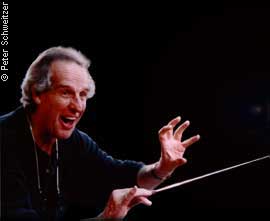
“A Harvard Business School study looked at job satisfaction. Orchestra players came just below prison guards. Chamber musicians came in at number 1. What’s the difference? The presence of a conductor.”
Boston Philharmonic Conductor Ben Zander, speaking at Leaders in London 2007

Rosamund Zander, Benjamin’s wife, wrote: “There is no guiding institution that speaks compellingly to people. Markets have replaced institutions and markets do not speak in a human tongue. This radical shift cries out for creativity. Art is about rearranging us.”

The leader, according to Zander, is the one who is masterful at creating and holding distinctions. Learning and leading is not about the transference of information, from conductor to orchestra or leader to employee. It is about the opening up of new categories to help people make sense of and thrive in a fast-changing world in which existing categories are not creative enough. “Framemakers create new frames. There is no problem that can’t be solved if you are willing to make a new frame, a new category.”

More from Zander at the Leaders in London blog, which I write weekly.


When it takes two to be great

Heard a great leadership lesson from the unlikely world of ballet today. Wayne Sleep, the former Royal Ballet dancer, described how Ninette de Valois, founder and then director of The Royal Ballet, brought together Dame Margot Fonteyn, then 41 and on the verge of retiring, with the virtually unknown 21-year-old Rudolf Nureyev, to dance Romeo and Juliet in 1963.

There was nervousness and apprehension on all sides: from the two principals themselves and from the ballet world in general. De Valois could have been setting everyone’s reputation up for a spectacular fall, including her own.

But, her instincts told her that this pairing could create something great, accelerate Nureyev’s development by pairing him with the greatest dancer of her generation, and revive Fonteyn’s career. In effect, it lifted the latter to even new heights, and she continued dancing, astonishingly, until she was 61.

By breaking convention and seeing the possibility that others couldn’t see, de Valois created possibly the greatest pairing in modern ballet. They went on to dance twenty roles together in the next decades.

I am personally completely unmoved by ballet; it leaves me cold. But, there are so many leadership lessons in that story that I lost count. The three that stuck, for me, are:

1. Tom Peters is fond of quoting Warren Bennis – “Great leaders revel in the talent of others”. Absolutely. Bringing other people together and watching them reach heights no-one had dreamt of is an act of leadership.

2. Great leaders are prepared to look foolish, as Sir John Hoskyns said. Any of us who step up, in any situation, and say or do what needs to be said or done, regardless of ridicule, regardless of established convention, is performing a powerfully creative act of leadership.

3. The myth of individual creativity and of the individual as leader: It can take two, or more, to unleash incredible creativity. The same with leadership – from Hewlett and Packard to Pret a Manger founders Sinclair Beecham and Julian Metcalfe, it often takes two or more to lead creatively and some of the best leadership acts and the most creative cultures are formed by a partnership…or even by a mass of people all leading and following each other simultaneously (flash mobs, for example).

Wayne Sleep was talking on Radio 4’s Woman’s Hour.


Bill Clinton on how to deal with strategic decay


The Birthday of Strangers

I’m a bit late on this, and thanks to Leadership Hub member Annalie Killian for drawing it to my attention:

“A study claims that between the ages of 20 and 40 people lose about one friend every year. Writer Theodore Zeldin, who has spent a lifetime studying friendships, wants to celebrate his 74th birthday with everyone – but only if you promise to have a proper conversation with a stranger.”

Zeldin wants us all to have deeper and richer conversations:

“…the Zeldin Method is a rather exacting solution.

His menu of conversation usually takes around two hours to complete and took up to four when the strangers were French.

However, he claims 99% of the participants found it enlightening and enjoyable, and a reflection that while we may be talking all the time we avoid discussing things in any depth.

He is also not a fan of small talk and gossip. It is, he says, like apes grooming one another.

It helps bond us but it fails to help us understand one another.”

More of the above article here: The Birthday of Strangers
And more on Zeldin’s ‘Muse Conversations’ approach to deepening our communication here: Muse Conversations