
• The 60 Second Leader
  • Seven Secrets of Inspired Leaders
  • The Little Book of Leadership
  • Leadership Hub for Corporates
  • Learning to Live with Huntington's Disease
 

Phil's blog

But, is it really urgent? Real urgency versus false urgency

It’s Manic Monday. It’s no doubt frantic at work – people running urgently from meeting to meeting and emailing the hell out of each other. Have you noticed people emailing from home Sunday nights recently, to try and get ahead so they can hit the ground running on Monday? I have.

How much of the frenetic activity is driven by the urgency of the market, and how much by people’s anxiety to be seen to be doing something?

When we are all being asked to do more with less, now, more than ever, you need to face down the stupid stuff. Got a regular meeting everyone hates that saps time and energy? Challenge it. That’s an act of leadership, no matter what ‘level’ you are at.

We all accumulate regular ‘to dos’. If we all focus on stripping out the non-productive stuff rather than just accepting it, we’ll be in a better position to respond to the genuine urgent call of the market.

There’s a new clip from John Kotter in The Leadership Hub today, on the difference between real urgency and false urgency. You can find it on the Home Page, top left, under the heading ‘Hub TV’. Here’s the link: www.theleadershiphub.com .

Go listen to and watch John Kotter. It takes four minutes. If you’re not too busy, that is.
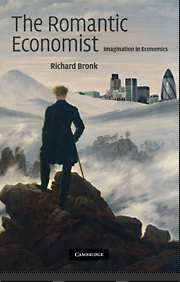

The Romantic Economist. Emotions and economic decision-making

I remember the much-missed Anita Roddick saying at an Inspired Leaders Network event: “I am NOT homo economicus.” Shouting, actually.

The post below on the ethical consumer highlights how emotions wrap into people’s economic decisions. Increasingly so in recent years, with concerns for the environment. So, I’ve been delighted at the growth of ‘behavioural economics’ (or ‘behavioral’ if you are in the US) as a discipline, to flesh out the whole 50% of the equation that classical and neo-classical economics misses out – the human element.

I’m even more delighted at Richard Bronk for writing The Romantic Economist. He draws on the work of John Ruskin and others to delve into the emotional bonds that customers form with organizations and that drive economic decisions and create economic patterns of behaviour/behavior.

A serendipity moment: see Shaun Smith’s most recent post on customer emotion and loyalty for an insight into the need to boost your emotional bonds in a downturn over on his CX Blog (Customer Experience blog).

And here’s the blurb for Richard Bronk’s new book, which is available about now:

Since economies are dynamic processes driven by creativity, social norms, and emotions as well as rational calculation, why do economists largely study them using static equilibrium models and narrow rationalistic assumptions? Economic activity is as much a function of imagination and social sentiments as of the rational optimisation of given preferences and goods. Richard Bronk argues that economists can best model and explain these creative and social aspects of markets by using new structuring assumptions and metaphors derived from the poetry and philosophy of the Romantics. By bridging the divide between literature and science, and between Romanticism and narrow forms of Rationalism, economists can access grounding assumptions, models, and research methods suitable for comprehending the creativity and social dimensions of economic activity. This is a guide to how economists and other social scientists can broaden their analytical repertoire to encompass the vital role of sentiments, language, and imagination.


Boeing leadership…and the limitations of ‘how to behave’ lists

Michael McKinney, in his Leading Blog on the Leadership Now website, points up Boeing’s expected leadership behaviours/behaviors:

“When Ginger Barnes spoke to employees at a leadership development program at the Boeing Leadership Center, she said, ‘Leadership is all about leaders teaching leaders and about relationships. We can execute the daylights out of anything, so ‘finds a way’ and ‘delivers results’ have always been strong traits. Where we need to improve is in the areas of ‘charts the course,’ ‘sets high expectations’ and ‘inspires others.’” That probably true just about anywhere you go. To strengthen the culture of leadership and accountability within the company, Boeing defined its expectations for leaders as:

A Boeing Leader:

* Charts the course
* Sets high expectations
* Inspires others
* Finds a way
* Lives the Boeing values
* Delivers results”

I also like the comment, however, left by Allen Adams on Michael’s post, that a lot of organizations have similar lists of expected behaviours/behaviors in their leaders, yet typically fail to inspire anyone, leading to Dilbert territory – the cynical, defeatist humor/humour coming from uninspiring people spouting but not living inspiring words.

I’m not suggesting that’s Boeing. It was Boeing, after all, that supposedly got 2,000 people in a room (hangar – try finding a room that 2,000 people will fit in) and got them, collectively, to come up with a ‘Critical Mass Intervention’ to steer the company towards its next big product – The Dreamliner. That ‘Wisdom of Crowds’ leadership seems to me to be more pertinent today. It’s a form of leadership everyone is involved in and can buy into.


Trust and leadership

Not enough leaders are trusted. That’s a common theme in workforce surveys. People will trust their peers and subordinates more than they trust their boss. What are you doing about it? The old “They don’t have to like me, since I have the power” approach is dead. If you think it’s not, here’s yet more evidence (above). It’s from the True Colors Consultancy slideshare embedded in The Customer Blog yesterday. They got it from the Watson Wyatt WorkUSA Survey


Customer intimacy doesn’t have to cost much

The trick at the moment is to lower costs without damaging service levels. The weakness embedded in that thinking is that distinctive service that delivers customer empathy and intimacy costs. It doesn’t always. Here’s an example:

At the W hotel in Union Square, New York, a doorman (sorry, Door Ambassador), Jose, noticed a lot of joggers went past with their dogs. And that often the dogs looked thirsty. He had been told by his boss that the entrance to the hotel was his realm. He was king of it.

So, he started putting out funky-looking water bowls. Joggers stopped for their dogs to drink, and chatted with Jose. The entrance to the Union Square W became a happening place. Out of this grew W’s PAWs (Pets Are Welcome) programme.

Since all hotels are trying to give the impression they care, what impact does it give to reinforce that message to thousands of people passing every day, when the door ambassador seems to care about people who aren’t even guests at his hotel?

And did it cost anything?

The PAW programme that grew out of Jose’s initiative gave the trendy W hotels another string to their bow in terms of a distinctive offering, as some W’s offer special pet and owner breaks.


Martin Luther King on Servant Leadership

Happy MLK Day!


Death to selling 2009 (Part 2)

Well, I don’t know about the company that made this, but I do like the messages in it. And so it’s featured here as part of my ‘death to selling’ campaign for 2009.

[slideshare id=927818&doc=the-trust-roadmap-selling-program-1232260012823154-2]


Leadership tip from the Dalai Lama

Well, this one has done the rounds and may be familiar to you. But, it resurfaced for me again today. He doesn’t present it as a leadership tip, just as an insight on how we should live. But, it clearly is a leadership tip anyway:

Follow the three Rs:
Respect for self
Respect for others
Responsibility for all your actions


Virgin One Account’s annual review

I just received my One Account annual review – It tells me how my mortgage is going and gives me advice on making best use of it.

When my bank – HSBC – calls me and offers me a ‘review’ to get the most out of my accounts with them, I know they are trying to sell me something and so I politely, or not so politely, decline.

When Richard Branson’s Virgin sold The One Account business to RBS I thought it was part of a depressing new trend for Virgin: use the founder’s charisma and undoubted commitment to customers to launch something and to attract a lot of customers. Then sell them to a big player. The ‘Virgin Countrywide’ trains that used to run through our local station suddenly became ‘Countrywide’ with no ‘Virgin’ on them, as the route had been sold. So, was there a pattern here, I wondered.

RBS always provided the banking behind The One Account, but Virgin provided the front-end branding, positioning, communications, and, most importantly, the values. Then Virgin sold the whole thing to RBS.

But, the One Account annual review stays true to Virgin’s original One Account. The opening letter says it is designed to help me make the most of my account. And it does. It includes tips on how to keep my outgoings down. It doesn’t try to sell me anything.

And, and, and…MOST interesting and revealing is that at the end of the list of bullet points on how to save money and get the most out of how the account is used, it says this:

“If you can think of anything else, then let us know and we’ll tell everyone.”

THAT is how 21st century suppliers should speak to customers – as equal partners speaking the same language and looking out for each others’ interests.

No other bank does that. So, I’ll be sticking with The One Account then. Looks like Virgin has infected RBS – this part of it at least.


When the Boss says he/she is in a meeting…

More Savage Chickens from Doug Savage here: www.savagechickens.com