• The 60 Second Leader
  • Seven Secrets of Inspired Leaders
  • The Little Book of Leadership
  • Leadership Hub for Corporates
  • Learning to Live with Huntington's Disease
 

Phil's Leadership blog

How to spot a cheat

There are some people who can see through the clutter of complexity and false assumptions and spot a truth that the rest of us have all failed to spot. I find Steve Levitt, the ‘rogue economist’, interesting for this reason.

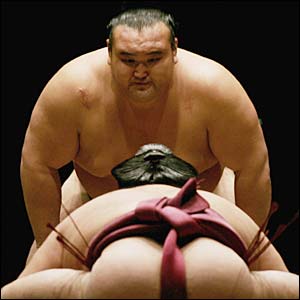
He’s particularly good at spotting cheats. One of Levitt’s earliest papers, which brought him to the attention of the economics community, was on why and how Sumo wrestlers cheat. He worked it out simply by studying the win-lose statistics and seeing patterns no-one else saw.

“He does not rely on fancy statistical techniques but on lateral thinking,” says The FT’s Tim Harford. “After dealing with a series of estate agents, he realised that they maximised their commissions by selling houses cheaply and quickly, because they were paid a small commission on the wholesale price, rather than a large commission on the extra value they were able to generate. But how to prove it? Levitt simply contrasted sales for clients with sales of the agents’ own houses. They take more time and get a higher price when their own cash is on the line.

As a fellow economist observes, “That result about real estate agents was just sitting there for any of thousands of economists to find. But they didn’t see it.”


Three things we can do to help the real leaders of Burma

It’s frustrating and scary, isn’t it, seeing real leaders, unarmed, putting their lives on the line on the streets of Burma at the moment.

“Please use your liberty to help promote ours,” said Aung San Suu Kyi. So, here are some things we can do to help. They may not feel like much, but better than doing nothing:

If you are in the UK

Three things we can do here
1. Send an email to the UK Prime Minister

2. Sign the ‘Free Burma’ petition

3. Donate to the free Burma campaign.

You can do all three on the link above.

If you are in the US, American websites expressing concern over Burma are recommending you email your congressmen and other representatives to ask them to step up pressure on the regime. The Burma Freedom Campaign has links allowing you to email President Bush and Secretary of State Condoleeza Rice if you click here and then scroll down to the bottom of the page.

If you are elsewhere in the world, Google ‘support Burma’ to browse events you may want to take part in, such as candlelight vigils, demonstrations outside embassies…

The link above contains other courses of action if you want to support the people of Burma longer term as they try and take the lead, at such enormous risk to themselves, in freeing themselves. Anita (see below) would be shouting loudest right now in their support. In her absence, we need to shout louder ourselves.


Who’s The Leader? What Nelson Mandela knows that George Bush doesn’t

Capstone, which publishes my book The 60 Second Leader, just created this, which is quite fun. It might take a minute to load:


Anita Roddick

Some nice tributes to Anita Roddick, whom I’ve long-admired as a leader, on her website, particularly from her children, who knew her best, of course. She once agreed to come and address The Inspired Leaders Network, when I worked there. I persuaded her to do so by explaining that the meeting was being held in the atrium of Bloomberg’s HQ in central London (that’s Michael Bloomberg, Mayor of New York and head of the Bloomberg financial information empire), and that she would be talking to some of the biggest moves and shakers within capitalism from within the very belly of the beast. She relished the challenge and got a standing ovation when she’d finished. She is much missed.

“The future lies in finding a broader bottom line to live by. First, you have to have fun. Second, you have to put love where your labor is. Third, you have to go in the opposite direction to everyone else.

We communicate with passion – and passion persuades. What we need is optimism, humanism, enthusiasm, intuition, curiosity, love, humour, magic, fun, and that secret ingredient… euphoria”.
– Anita Roddick


Psychiatric wards and good leadership

Marion Janner, over at the Bright Blog, does a great job of highlighting how good leadership – at all levels – can transform the quality of life for people in acute mental health wards and other psychiatric facilities. Check out her latest post on Wotton Lawn Hospital for an inspiring example.

Marion created the Star Wards programme, which offers acute wards a pack of practical transformational ideas for taking the lead in improving every aspect of life and work in a mental health ward. She then reports in her blog on examples of surprisingly good practice, to inspire others by showing them what can be achieved.

As with so much in healthcare, the differences in practice between some mental health acute wards where people are apparently left lethargic and sitting around versus wards where, as Marion describes in her most recent post, a particularly fragile looking patient was deeply engrossed in potting a seedling in a plastic cup as part of the nursery for the garden, is not down to resources, but to leadership, commitment to enriching people’s lives, imagination and a willingness to improvise and engage.

I’m a great admirer of Marion’s work as she is a powerful example of how to lead change when you may not be the technical ‘leader’ in an organization. She is an outside-in change agent who inspires organizations to change for the better without actually being part of their leadership hierarchy. Which is exactly as it should be today. There shouldn’t be a leadership hierarchy in any organization; just catalysts for change at all levels and a readiness at all levels to listen to their good advice and let people take the initiative by sharing ideas to lead change.

See the Customer Blog for a nice example Marion quotes about the power of improvisation when dealing with customers – in this case acute mental health patients – involving a paper plate and a bit of imagination on the part of a member of staff.


The Leadership Puppets (video)

Er, don’t watch all of it: it’ll drive you crazy. Give it a minute or two to load, then the blank space below this should disappear. I never did like that John C. Maxwell book much, anyway…


Leaders and Losers: Beckham and Clinton

I usually hate sporting analogies, but bear with me on this one:

I remember my respect for David Beckham going way up eight years ago when I heard him tell this story: Manchester United were 1-0 down to Bayern Munich in the final of the European Champions League. It was the 89th minute of the game. Just one minute remaining on the clock for the most prestigious trophy in European football (OK, soccer, if you must). Beckham was about to take a corner.

This was a trophy United had not won since 1968. Passions were running high. Beckham looked up as he was about to take the corner, with one minute of the match left, and saw the officials in the stand bringing the Champions League Cup out, ready for the presentation. He saw a flash of colour: they had already tied Bayern Munich’s team colours onto the handles of the trophy.

Beckham says one thought ran through his head. And it wasn’t “We’ve lost”. It was “Oh no you don’t!”.

Millions of people watching the game on TV knew that, with one minute to go, United had lost. 70,000 people in the stadium knew that United had lost. 11 members of the Bayern Munich team knew that United had lost. Even the officials in charge of presenting the trophy knew that United had lost.

But Beckham didn’t. And he galvanised his team into a three minute frenzy. From his corner, they equalised. Two minutes later, in extra time, they scored the winning goal. The officials quietly changed the team colours on the handles of the trophy to red and white.

The last minute of the game, before the final goal is scored, is extraordinary to watch (I have it on video: sorry; been a fan since I was tiny and saw them win it in 1968 in black and white on TV). The faces of the German players are complete panic. From knowing they have won, they somehow know they have lost, even before the last goal is scored, even though the statistical probability of anyone scoring in those remaining seconds is minuscule.

I was reminded of this by Gavin Esler’s brilliant series on Radio 4 this morning about the Clinton years in The White House. Like Tony Blair when he first walked into Number 10, Clinton was mystified that the levers of power didn’t seem connected to anything. Nothing went right in his first few months. A friend of his commented that when Clinton was winning, he would coast and needed reminding to push. But, when he was losing, he was at his best. He became so depressed when he lost both Houses to the Republicans that “he moped for months” trying to work out what to do. Then began the most successful period of his presidency. It was a Comeback Kid moment.

Leaders lose well, in the sense described above. Losing makes them stronger.

Gavin Esler’s series on The Clinton Years is compulsive listening. It’s on BBC Radio 4 . At time of writing this, there’s a link to it under the ‘listen again’ heading on the BBC Radio 4 website


Truemor Number 1

“Truemor #1: 24% of the bottled water bought in the US is tap water processed and branded by Coke and Pepsi.”

From Guy Kawasaki’s neat Top Ten Truemors podcast, lasting about a minute and a half and very entertaining, which you can find here:

Top Ten Truemors


‘Know why’ over ‘Know how’

Harvard’s Jim Hesketh is hosting an interesting forum on whether ‘Millennials’ – people born at the tail end of the 1970s – will make good managers and leaders or not. They’re the “Generation Y” who are seen as hard work by the people who manage them because they prize ‘know why’ over ‘know how’ – If they don’t buy into the ‘why’ of what you are doing you won’t get their whole-hearted co-operation.

My thoughts are that the Gen Y, with their lack of respect for authority and constant questioning and tinkering and need for reasons, are shaping up to be a far better crop of leaders than the current lot if this example (below)is anything to go by. It impressed me, anyway…

I just came back from a family holiday in Portugal. I always enjoy these, as it allows me to reconnect with my older son and his wife while lounging around the pool reading and chatting, and I always learn something from them. They are ‘Millenials’, I guess, though I’m never sure about the wisdom of classifying a whole generation with particular traits: it seems based on the same principle as astrology.

Anyway, here’s what I learnt from Chantel, my daughter-in-law, this time around:

She manages the children’s department in a book store. The previous department head had been in post for years and left suddenly. Chantel was promoted into the position. No-one else knew how the department was run. It just ran well, with the department head seen as the fount of all knowledge and the ‘go to’ person to deal with any problems, as is often the case with a long-standing efficient department manager who has been in place for years.

Since no-one expected the department head to leave, there had been no succession planning. So, where do you go when the ‘go to’ person has gone? “I found this hidden world of paperwork and processes that the previous boss had kept away from me, for all the right reasons. This was the secret formula that kept the department running well and I was terrified of tinkering with it,” said Chantel.

Chantel took a deep breath and spent some time figuring out how it all worked. Then she spotted an improvement she wanted to make, made it, and held her breath. Had she messed with the magic formula? Would it all come crashing down around her ears? Suddenly people came out of the woodwork saying how great the change was and why hadn’t they done it before. Emboldened by this, she made some more changes, each of which was welcomed. Nobody had imagined doing things differently before because, well, it had all worked fine before.

A few months on and Chantel has been offered another promotion, managing the children’s department at another store. She is grooming her successor in the old job, introducing her to the paperwork and the processes that the department head has to manage, because she doesn’t want her successor left in the dark and having to figure it out herself, as she had to.

And this is the bit that impressed me: “I said to her, when I come back in a few months to visit, don’t let me find this all the same as I left it. Make changes! Make it better! I don’t want to find when I come back that you are doing the same things I was. I want you doing it better than I did!”

I love that message: “Here’s what you’re inheriting and your job is to change it!” “Change this!” is such a powerful green light to flash at leaders coming into new positions. As ever, that means leaders at all levels, not just the official leader in the hierarchy.

It contrasts powerfully with the old notion of leaders as guardians of the way things have been done and as champions of their own way of doing things, and scared of allowing alternative approaches in case they turn out to be better than their own.

If that’s typical of Millenial generation leadership, then I think we are in safe hands.

Here’s Jim Hesketh’s forum, over at the Harvard Working Knowledge site


I have a name for my pain

I have been tardy in keeping up with Stephanie West Allen and Jeffrey Schwartz’s new initiative, Brains on Purpose.

When I did start reading it this morning, I got immersed in reading back through Stephanie’s material. One of the many things that struck me was the post on naming feelings, following on from a flurry of articles on the subject in Scientific American, The Daily Telegraph and other titles.

One of the most powerful lines in the first Batman film was when Jack Nicholson’s Joker says: “I have a name for my pain.” I was never quite sure why it was so resonant.

This whole emerging area of neuroplasticity , which West Allen and Schwartz explore in Brains On Purpose, with particular regard to conflict resolution, shows the power of naming feelings in helping to damp down unhelpful emotional patterns – patterns that lead to conflict or distraction from purpose – and amplify constructive emotional patterns; kind of a ‘brain, heal thyself’ approach.

I was attracted to this work through Schwartz and David Rock’s work on what they call the Neuroscience of Leadership – based on the new theory that the brain changes shape according to our experiences and thoughts and feelings.

The neurons themselves don’t change, according to the theory. But, the web of synapses between them thickens and grows where our focus of attention is greatest. Which is why, for example, when famously opinionated London Black Cab drivers like to think they have bigger brains than anyone else, it turns out they are right. The hippocampus in their brain is larger than in the average person, because before they earn their cab driver’s licence they have to learn The Knowledge – hold a mental map in their heads of every street in London and the shortest routes from place to place.

I’ve based the Leadership Hub on the principle of the power of attention in building up synapses, borrowing Rock and Schwartz’s principle that we learn best in small doses – maybe fifteen minutes a week.

Nature versus Nurture is beginning to look very much like last century’s argument. As so often, the answer looks increasingly like ‘and’ rather than ‘either/or’.

More, below, on self-organizing systems that shape themselves and grow as they are used.