• The 60 Second Leader
  • Seven Secrets of Inspired Leaders
  • The Little Book of Leadership
  • Leadership Hub for Corporates
  • Learning to Live with Huntington's Disease
 

Phil's blog

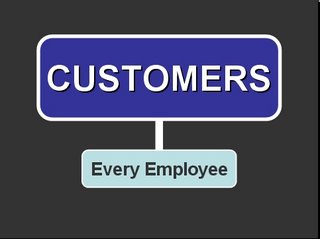
Starbucks’ Organization Chart

Brand Autopsy’s John Moore reminds us that this is the real organization chart. No matter what your over-complicated existing one claims to be, it’s not reality. This is. John says this is Starbucks’ organization chart, though they have one of the complicated ones, too. Sounds like trying to have your latte and drink it.


Crowdsourcing

PICTURE CREDIT: www.3dm3.com

From Shaping Tomorrow, I learn this new word (OK, it’s been around for a while, but I’m slow sometimes), which I love: Crowdsourcing. Inspired by the book The Wisdom of Crowds, of course. Here’s what it means, according to the Shaping Tomorrow crew:

We all know something
We all have unique ideas. We can all contribute to our futures. And, though as individuals we might be blind to tomorrow, collectively we can see much of what is coming.

Stakeholder views
We have learned from direct experience that companies miss the most obvious source of information on how the future will be different; their stakeholders. An organisation’s people, its suppliers and customers often have deep insights into many aspects of the future that management ignores. Tapping this source is easy and fast using tightly framed questions about how the future will be different and what you should be doing about it.”


Crowdsourcing

From Shaping Tomorrow, I learn this new word, which I love: Crowdsourcing. Inspired by the book The Wisdom of Crowds, of course. Here’s what it means, according to the Shaping Tomorrow crew:

“We all know something
We all have unique ideas. We can all contribute to our futures. And, though as individuals we might be blind to tomorrow, collectively we can see much of what is coming.

Stakeholder views
We have learned from direct experience that companies miss the most obvious source of information on how the future will be different; their stakeholders. An organisation’s people, its suppliers and customers often have deep insights into many aspects of the future that management ignores. Tapping this source is easy and fast using tightly framed questions about how the future will be different and what you should be doing about it.”


The secret of greatness (isn’t in the theory)

Kate Moor posted this in her blog over in The Leadership Hub. It’s from General Colin Powell and rings true to me:

“Organization doesn’t really accomplish anything.
Plans don’t accomplish anything, either.
Theories of management don’t much matter.
Endeavors succeed or fail because of the people involved.
Only by attracting the best people will you accomplish great deeds.”


Why Bad Leaders Think They Are Good

Research shows that when bad leaders take a leadership self-assessment test they score themselves highly. They have blind spots about their own leadership and can’t see that they can be any better. That blind spot is self-reinforcing: it’s a major reason they are bad leaders.

Yet, when good leaders take leadership self-assessments, they often score themselves lower than the bad leaders. That’s because they always want to be better, and can see a long improvement road ahead.

In other words, a lot of bad leaders are at stage 1 of these four stages of learning:

i. Unconscious Incompetence
ii. Conscious Incompetence
iii. Conscious Competence
iv. Unconscious Competence (Mastery)

Source: The four stages of learning come from Joseph O’Connor’s book Introducing NLP (Neuro Linguistic Programming). I’m not a fan of most practitioners of NLP, who see it as a way of influencing other people. But, some of the thinking behind it is interesting.


The Law of Unexpected Consequences

Cause and effect is never as simple as it looks.

What do the elements of this list have in common?

Anesthesia
Cellophane
cholesterol lowering drugs
cornflakes
dynamite
the ice cream soda
Ivory soap
artificial sweeteners
nylon
Penicillin
photography
Rayon
PVC
Smallpox vaccine
stainless steel, and
Teflon.

Yes, like Post-It note glue, they were all discovered ‘by accident’. Or rather, their application came after their discovery.

Most organizations adopt a scientific model of innovation, as innovation thinking emerged from Research and Development. R&D-based innovation assumes controlled cause and effect.

But, innovation throughout the enterprise in how work is done is the broader role that leaders have to develop. And that tends to emerge rather than be prescribed.

Harvard’s Robert D. Austin says that to lead innovation you have to draw from art as much as from science.

Austin notes that artists try to develop a talent for causing good accidents, and they cultivate an ability to notice the value in interesting accidents.

Pasteur called this the “prepared mind”. In leadership terms, we need to move away from seeing the leader as an external force for change, one whose actions are ’causes’ that intend to generate the ‘effect’ of change/improvement throughout the organization, and see leadership as something that takes place within the system, helping the organization ‘bet’ on emerging trends as they occur.


The New Leaders or Primal Leadership

This book is better known as Primal Leadership. Inexplicably, given the power of that title, the publisher in the UK decided to label it The New Leaders (yawn).

Daniel Goleman and his co-authors Richard Boyatzis and Annie McKee helped pioneer the now accepted idea that leaders don’t get effective results with logic alone, and that they need to deploy Emotional Intelligence to get the best out of people and organizations…and themselves.

Here are selected excerpts to give you a flavour:

“For too long managers have seen emotions at work as noise cluttering the rational operation of organizations. But the time for ignoring emotions as irrelevant to business has passed. What organizations everywhere need now is to realize the benefits of primal leadership by cultivating leaders who generate the emotional resonance that lets people flourish.”

Primal Leadership Definition
This emotional task of the leader is primal – that is, first – in two senses: It is both the original and the most important act of leadership.”

Resonance vs Dissonance
When leaders drive emotions positively we call this effect resonance. When they drive emotions negatively, leaders spawn dissonance, undermining the emotional foundations that let people shine. Whether an organization withers or flourishes depends to a remarkable extent on the leaders’ effectiveness in this primal emotional dimension.”

Laughter: the shortest distance between two people
(NB As far as I know, Goleman took that line from stand-up comedian Victor Borge).
“In a neurological sense, laughing represents the shortest distance between two people because it instantly interlocks limbic systems. This immediate, involuntary reaction, as one researcher puts it, involves “the most direct communication possible between people – brain to brain – with our intellect just going for the ride, in what might be called a ‘limbic lock’.”

Leadership, not leader
As the sociologist Max Weber argued a century ago, institutions that endure thrive not because of one leader’s charisma, but because they cultivate leadership throughout the system.

Changes to the EI model
“Readers familiar with earlier versions of the EI model will notice some changes here. Where we formerly listed five main domains of EI, we now have simplified the model into four domains – self-awareness, self-management, social awareness, and relationship management – with eighteen competencies instead of the original twenty-five (see the chart). For instance, an EI domain would be social awareness; a competency in that domain would be empathy or service. The result is an emotional intelligence model that more clearly links specific clusters of competencies to the underlying brain dynamics that drive them.”

EI CAN be learnt
“These EI competencies are not innate talents, but learned abilities, each of which has a unique contribution to making leaders more resonant, and therefore more effective.
That fact speaks to an urgent business need, one with great impact on financial results: helping leaders to lead more effectively.”

The resurrection of Wispa

Cadbury Schweppes stopped making its Wispa chocolate bar four years ago due to flagging sales. Over the summer, after massive noise from customers on FaceBook and YouTube called for its return, the company announced it would re-introduce the chocolate bar to the UK this month (October).

Nearly 14,000 people joined ‘bring back Wispa’ groups on Facebook, ‘This is the first time that the power of the Internet played such an intrinsic role in the return of a Cadbury brand,’ the company said.

A spokesman for Wolff Olins, the design and branding consultants, noted: ‘It took discarding the brand for people to really want it. This is a good example of consumers owning the brand, versus the corporation.’

So who owns your brand? Some marketing analysts now recommend that Cadbury hand over ‘ownership’ of the brand positioning for Wispa bars to this customer community of 14,000, to maintain the customer loyalty and sense of ownership of the brand they have built up. Any lessons there for you to think about?

Scott Bedbury, the brand guru who was in charge of marketing at Nike and Starbucks during both those companies’ most spectacular growth periods, says one of the biggest blind spots organizations have is the idea that they own their own brand. In fact, he says, you have very little control over your own brand as it lives ‘out there’ in your customers’ heads. The resurrection of Wispa is a perfect example of that this month.


The ants have megaphones

“For a generation of customers used to doing their buying research by search engine, a company’s brand is not what the company says it is, but what Google says it is. The new taskmasters are us. Word of mouth is now a public conversation, carried on in blog comments and customer reviews, exhaustively collated and measured. The ants have megaphones.”

Chris Anderson, Editor-in-Chief, Wired, from his book The Long Tail: Why the future of business is selling less of more. If you are one of the many organizations that assumes that 80% of your profits come from 20% of your customers, you really need to look closely at the new phenomenon of the ‘long tail’ to see ifyou need to revise the figures.


How to spot a cheat

There are some people who can see through the clutter of complexity and false assumptions and spot a truth that the rest of us have all failed to spot. I find Steve Levitt, the ‘rogue economist’, interesting for this reason.

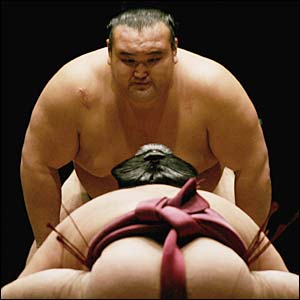
He’s particularly good at spotting cheats. One of Levitt’s earliest papers, which brought him to the attention of the economics community, was on why and how Sumo wrestlers cheat. He worked it out simply by studying the win-lose statistics and seeing patterns no-one else saw.

“He does not rely on fancy statistical techniques but on lateral thinking,” says The FT’s Tim Harford. “After dealing with a series of estate agents, he realised that they maximised their commissions by selling houses cheaply and quickly, because they were paid a small commission on the wholesale price, rather than a large commission on the extra value they were able to generate. But how to prove it? Levitt simply contrasted sales for clients with sales of the agents’ own houses. They take more time and get a higher price when their own cash is on the line.

As a fellow economist observes, “That result about real estate agents was just sitting there for any of thousands of economists to find. But they didn’t see it.”