How strong is your relationship with customers? And where do you look to find out?
I hear you murmuring “Customer Satisfaction Scores: they’ve gone up and up under my watch.” I’m sure they have. They go up and up under most people’s watch. Partly because people learn how to work the system – I’m not saying they’re dishonest, just that if you focus on any measure you can make it go up. That tells you something. But not enough.
You need to immerse far, far deeper in what’s going on than relying on customer satisfaction scores.
The three elements of relationship strength are:
1. Trust. Consumers believe the brand will deliver its promise, respect them and be open and honest with them
2. Commitment. Consumers feel some longer term emotional attachment to their relationship with the brand.
3. Alignment and Mutuality. A two-way affinity between consumers and the brand, with mutual respect, shared values and expectations met – which results in a continually rewarding experience.
Source: Carlson Marketing Group survey of 16,000 consumers in 2003. I read the survey findings in the book Brands & Branding, which has just been updated and re-issued.
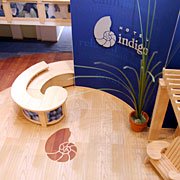
I like this description of how Hotel Indigo’s branding differs from other hotels.
“The program keeps time with the brand’s retail-inspired concept of seasonal renewal where menu items, music, aromas, artwork and murals change four times a year to transform the public spaces in each hotel, which offers even the most frequent guest a distinctive and engaging experience with each and every stay.”
It’s harder and harder to come up with a balance between recognizable brand design and the need to be seen as vibrant and not boring. The old argument about brand standards – that you see the Golden Arches and know exactly what to expect when you pull into the drive thru – ignores the downside: where’s the surprise? Brands get boring when the experience is repeatable and predictable (exactly the qualities ‘branding’ is supposed to represent).
McDonald’s deals with that problem with an ever-changing menu – a core offer surrounded by products that change every few months.
But fast food is one thing. Capital intensive brands that don’t fit into a Fast Moving Consumer Goods retail format are another. Apart from a brand refresh every few years, when the physical designed aspects of the brand are already looking tired, what do you do to balance distinctive uniqueness on the one hand and not looking ‘unchanging’ in a changing world on the other?
The Hotel Indigo solution I like. It’s not quite an ‘ever-changing brand’. It’s a brand that changes its clothes four times a year. Neat.
Declaration of interest: I got the above from an IHG press release. I get IHG press releases because I do quite a lot of work for IHG. However, I wouldn’t blog about it here if I didn’t genuinely find something like the above new, clever, and an example of how to take branding forward and evolve it.
Q: What will the best companies do during this recession?
A:1. They’ll get ahead of the curve and conserve their cash.
2. They’ll take out frills and focus on the core.
3. And then they’ll think of how the market will have changed in two or three years and what innovation they will need to have done to compete successfully…
4. …and they’ll do that innovation now.
Source: Ram Charan, the renowned business advisor, talking to Harvard Management Update about how to lead through the recession.
Charan says you need to lead now “Head in, hands on” – fully immersed in operations, and practising what he calls ‘management intensity’ – as the situation is so uncertain. Basically he’s arguing for a stronger focus on execution.
I’d add beware of micro-management, though. So much is out of your control in a recession that the temptation is to tighten control over the bits you can control, as a kind of compensation. It’s an illusion. You’ll just choke off people’s initiative and drive if you do that too much.
Whisper it carefully: I don’t really believe in ‘The Leader’. I believe in leadership, yes, ideally distributed and aligned behind a common agreed purpose rather than a person. But leadership embodied in one person – The Leader – only means one thing to me. I used to be a historian. Work it out.
So, I like Pat Ballin’s piece on co-leadership over in The Leadership Hub. Pat kicks off his piece by citing Senge and Co’s paper in the HBR in 2007 ‘In Praise of The Incomplete Leader’.
He could do with some examples of complementary leadership teams and David Straker chips in with Hewlett & Packard as one example.
Pat goes on to suggest this co-leadership coda:
High Shared Power/High Shared Trust = Co-leadership
High Shared Power/Low Shared Trust = Power-Sharing
Low Shared Power/High Shared Trust = Good Deputy
Low Shared Power/Low Shared Trust = Factotum
Co-leadership is an interesting form of leadership. But, what really interests me about it is how it breaks the core myth of leadership – that you have to have a single leader at the top, and that leadership somehow emanates from that person.
You can read more from Pat and David on co-leadership here .
I like this example of how The Geek Squad uses Twitter, from Shaun Smith’s Customer Experience blog:
One of my favourite brands is The Geek Squad. The other day, one of their Special Agents was fixing my computer and as always, was giving me great advice on technology in general. He told me that The Geek Squad and their partner, the Carphone Warehouse, use the search functionality on Twitter to find people who have problems with their handsets and technology and then send a message to them offering help and advice-even when these people are not their customers.
I was in Berlin a while ago and took a picture of sacks of flour. I was in a cafe. The sacks of flour were on a pallet for the chefs to make pizza with. The sacks of flour were IN the cafe, not behind, in some back room, but piled up next to where the customers were sitting. Every now and again a chef wandered out from the open plan kitchen, grabbed a sack and wandered back in again. Who cares and a big so what you might think. But, it’s significant.
In traditional organizations, there’s back of house and front of house. There are kitchens and delivery areas, stage doors, staff entrances, factories, offices at the back, the restaurant, theatre, show-room, store, advertising, marketing, a facade of reality at the front.
But, customers want to see your innards. They want to be involved in the creation process. Or at least to see what’s going in their pizza. The barriers are coming down. There are chef tables in the kitchen and the customers pay a premium to sit there, in the ‘factory’, while their meal is made. Or they join in if the chef lets them. I was out with my friend Marion, who loves immersing in the experience this way. She got up from our chef’s table, at the chef’s request, put on an apron and co-cooked our dinner, while the chef coached her.
This isn’t a new point. Alvin Toffler coined the word ‘prosumer’ decades ago. But, it’s still widely missed by most organizations.
I was reminded of it while watching K T Tunstall ‘build’ a song, live, in front of an audience. She records her own backing, in real time, one element at a time – rhythm tapped out on the guitar, then voice, clap, then tambourine – then sings the song over the top of it, then adds some more backing sounds towards the end – all in front of the audience, using pedal switches to record and play back.
So, in her industry, the recording studio is the back room or back office. But, she takes switches, wires and recording bits and pieces on stage and shares with the audience the act of creation. She builds the song in front of them, just like Build A Bear stores build, er, bears.
The outside and the inside are merging, you see. The barriers are down. Stop thinking of your organization as having an inside (the people you pay and the back office and the place where the stuff is made) and an outside (where the customers are). Let the customers in. Let your people and processes out. I suspect you’ll be dead soon as an organization if you don’t. I can’t find the picture of sacks of flour in the cafe, so here’s K T Tunstall building a song in front of her customers – involving them in the act of creation – to show you what I mean.
I like this, which is an extract from a post by Columbia Business School Professor Rita McGrath. A link to her complete post is at the end of this.
In a downturn, uncertainty freezes people. So, your job is to absorb their uncertainty. Below are five tips to help you do that.
So ask yourself:
1. Am I providing a clear set of assumptions for people to operate on, with the understanding that they may change as more information becomes available?
2. Have I made sure to reach out to people who seem badly affected…?
3. Am I moving quickly enough to help people get past the current situation tofocus on the futureand what is coming next?
4. Have I made clear to the people who are deeply valued by the organization that they have a promising future?
5. When a decision will affect someone negatively, have I personally delivered the bad news, dealt with the fallout in a fair and transparent way, and made it clear to observers why the decision was made?
Source and read more: The five points are from a piece by Columbia Business School Professor Rita McGrath, called Absorb Their Uncertainty – and get your people unstuck . Click on the title (‘Absorb Their etc.’) to read her full blog post, which takes about three minutes.
This is from the Harvard Daily Management Tip, which is well worth signing up for. The link at the bottom of this post takes you to a Harvard screen where you can sign up for the tip.
What you say to customers now can help your company emerge stronger when the economic climate improves. Keep five things in mind:
1. Be empathetic — without being pathetic. Forgo messages implying customers should help you reduce inventory. Instead, tell them about well-deserved bargains.
2. Offer real assistance — not happy talk. Companies that can make their promises tangible can gain an advantage.
3. Adjust to your customers’ changed behaviors. They are probably at work longer, shopping for discounts, and eating out less. Bring the conversation to them.
4. Address people’s attention deficit. Time-starved, on-edge consumers value advertising that’s quick and to the point.
5. Say something. Research shows that most companies that “go dark” during a downturn damage customer relationships.
Today’s Management Tip was adapted from “What to Say to Customers Now” by Paul Nunes.
The BBC has now had three, at my count, TV programs/programmes on Darwin and his legacy, one presented by David Attenborough, one by Andrew Marr and a whole mini-series presented by a French biologist with such perfect English that you found yourself spending the whole time trying to catch some evidence of the evolution of his own language by listening for a hint, even a hint, of French mispronunciation. I didn’t find any.
All were excellent, but all told the same story and it does make you wonder about whether left hands knew what right hands were doing.
Anyway, the main thing in our head is often – usually – not the main message in the learning. Between Darwin and popular consciousness some switch is tripped that sends our train off along the wrong track.
So, it is with ‘survival of the fittest‘ that has become a mantra for tough-edged management and leadership in commercial organizations the world over.
It’s not about brute-ism and a ‘take no prisoners’ approach to capitalism.
What Darwin actually said was it’s those that are most ready to change that survive, not those that are most rigid.
“It is not the strongest of the species that survive, nor the most intelligent, but the ones most responsive to change.”
I don’t think Ziggy the Dustman, as this guy was nicknamed (he used to dance past my daughter-in-law’s bookshop in Chiswick High Road, West London), is doing this for anyone other than himself. We think his real name is Billy, but aren’t sure. He’s Polish.
If you study the Fish! phenomenon (Pike’s Place Fish Market in Seattle) and other places in which people with apparently dull but high profile (in terms of visibility) jobs suddenly turn the whole company from looking mundane to looking, from the customer’s point of view, like an exciting, life-enhancing place to do business with, then you can see from Ziggy/Billy that even the most mundane job can be turned into something that inspires and delights.
We learn from extremes. I’m not saying everyone on your front line has to dance. But, can you see the light in their eyes? If not, look at what Ben Zander says (search for him in www.theleadershiphub.com and there are several learning points in there ) about how the leader’s job is to allow people to shine, and look at how people like Tony Hsieh, CEO at Zappo’s, lead, to learn how to do it.
“People are like stained – glass windows.
They sparkle and shine when the sun is out,
but when the darkness sets in,
their true beauty is revealed
only if there is a light from within.” – Elizabeth Kubler-Ross
It’s part of a leader’s job to spot the light in someone’s eyes and allow them to shine. Particularly in a downturn when it’s dark outside and everyone’s worried. If the light isn’t there or is wavering, then it’s a leader’s job to help the person find it and release it. I know it’s a big ask. What, you think this stuff is easy?
So, how do I action this?
Here’s one question to consider asking people at the end of a work day to help with this ‘light’ thing: “What did you enjoy about today?” If you’re really brave, you could write into people’s job expectations or job descriptions a three-word expectation “Enjoy your job”, and then work with each person who reports to you to figure out what you and they need to do to make that happen.
There is no such thing as mundane, other than we let it become so.


 I like this description of how Hotel Indigo’s branding differs from other hotels.
 LinkedIn