




• The 60 Second Leader
  • Seven Secrets of Inspired Leaders
  • The Little Book of Leadership
  • Leadership Hub for Corporates
  • Learning to Live with Huntington's Disease
 

Phil's Customer Service blog

All the world’s a stage: team psychology and performance

I just heard a psychologist talking about how people perform better when they feel they are being watched or ‘on show’. It reminded me of Pine & Gilmore’s book The Experience Economy and the notion that all business is now theatre and your people are players.

As European Customer Management World is coming up next month, that, in turn, reminded me of last year’s event. My friend Chris Daffy had invited some people to a pre-conference dinner. Each course was introduced by the chef and then the servers swept in, around ten of them I think, like a river from two doors on the side.

I watched them – five on each side of the long table – step back in unison and glance at the head waiter, who gave a small signal with a nod of his head, like a conductor of an orchestra setting the timing.

All ten moved forward at the same time, like dancers, and placed the next dish before the guest in front of them. Then they stepped back, all turned as if in military formation, and strode out the door. Some of them were smiling to themselves in satisfaction. I wanted to give them a round of applause.

This wasn’t serving a meal. It was choreographed theatre. It was art. When I was a student I used to be a room service waiter in the summer holidays, at a five star hotel. It was boring work with long hours and a gruelling regime in the kitchens when you ordered and collected the meals as the lowest of the low – the waiter (think lots of Gordon Ramsays shouting at you).

But these people weren’t at the bottom of a pecking order. They were artists on show, part of a flawless team. And they knew it. Whatever your sector is, you can do the same. The Geek Squad even does it with IT service and repair.

All work is now theatre. Your customer experience will be all the better for it once you realise that.


Re-defining luxury and the ‘richness vs reach’ equation

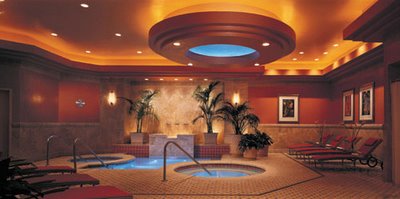
Shaun Smith has an interesting post on how The Six Senses resort brand sets out to re-define luxury, over at The Customer Experience Blog. That set me thinking on Evans & Wurster’s old (old? crikey. 1999) book Blown To Bits in which they look at how the ‘richness versus reach’ equation is now, er, blown to bits, as they put it. For example, banking divides its customer experience into a ‘mass’ offer (‘reach’, as in mass reach) and an elite, exclusive offer (private banking or the ‘riches’ part of the segmentation). This divide, increasingly, doesn’t work, as the customer dissatisfaction levels with banks shows.

The arrival of mass luxury (through mass affluence) has left the old equation (the assumpton that ‘mass’ and ‘luxury’ are distinct) in tatters, argued Evans and Wurster. Quite right. Brilliant Slideshare, below, helps cement our thinking on how luxury ain’t what it used to be. If you think fashion, for example, it’s now cool to mix designer labels with accessories from Zara, Top Shop, Primark (well, up to a point). In the Slideshare, look out for the parallel example of Louis Vuitton setting up ten street vendors in New York; not to sell knock-offs, of course, but genuine Vuitton stuff.


BA, BAA, Terminal 5: Shooting fish in a barrel

I’m not going to comment, as it’s a bit like shooting fish in a barrel, apart from to say that it’s just as well they were forced to cancel at the last minute their plans to fingerprint every single passenger passing through the new Heathrow Terminal 5, which was ‘launched’ yesterday, to a fanfare of…complete chaos.

If they had fingerprinted customers as well as telling them their luggage could not go on the plane and as well as making some of them sleep on the floor last night and as well as blaming a whole series of daft, stupid problems that proved they simply hadn’t worked the bugs out of the system (damn: I couldn’t resist commenting after all) they’d have had a riot on their hands instead of just a fiasco.

Since British Airways already loses more bags than any other airline, how are they going to recover from this self-created service farce? OK, I’ll shut up. This is from the Telegraph (below). It’s painful to read – especially the bit where, instead of focussing on service recovery and apologising profusely, BA and BAA instead blame each other for the errors. Here’s a clue, chaps – Customers don’t care; they blame both of you. And rightly, so :

“By mid-afternoon on Thursday, British Airways had cancelled 33 of the 534 services it planned to operate from the terminal.

In a statement, the company blamed the difficulties on a number of factors, including delays at the staff car park and security hold-ups which affected baggage handlers.

In the early evening, passengers waiting in Terminal 5’s departure hall were told that no one would be permitted to fly with their hold baggage for the remainder of the day. BA said that seven evening flights — a mixture of European and domestic — had left without hold luggage, around another dozen had departed with some baggage having been loaded before the check in desks were shut down.

Those unable to travel were re-booked or offered a refund by the airline.

It was the culmination of a miserable day at Heathrow’s showpiece £4.3 billion terminal during which passengers were confronted by a series of other glitches, ranging from escalators breaking down to pay machines at the car park not working properly…

A backlog, caused partly by delays to baggage handlers clearing security, meant check-in desks closed and passengers were only able to take hand luggage on board most flights.

Some stranded passengers spent the night on the floor of the new terminal.

n part, the difficulties were caused by BAA’s new baggage handling computer system.

It proved too sophisticated for some staff who arrived for the first shift of the day and were unable to log on and start work.

Others had difficulty getting into the airport because of security screening problems.

As a result, the first flights to Brussels, Amsterdam and Edinburgh left without any luggage whatsoever…

Then as the airport struggled to clear baggage from inbound passengers, the entire “state of the art” system crashed completely because the number of suitcases circulating on the belts had reached saturation point.

The shambolic events of the day led to the airline and airport holding each other responsible for much of the debacle. British Airways said the system was provided by the airport, while BAA said it was the airline which was responsible for getting bags from the aircraft to the belts.”


Juran’s Four Human Obstacles to Quality

Joseph Juran died last week, aged 103. So, in recognition of his contribution to making organizations more customer-focussed by helping them to build in quality, here are Juran’s Four Human Obstacles to Quality

1. Unawareness
People are not aware that they are creating quality problems

2. Competition in priorities
People are unable to achieve quality because other goals that have higher priority get in the way.

3. Sub-optimization
The achievement of quality locally gets in the way of overall quality

4. Cultural myths
People hold sincere beliefs that are related to quality but that are not based on fact. These myths can be an obstacle to constructive efforts to achieve quality leadership.

“In most companies, these obstacles have their origin in prior managerial practices. It is therefore important to avoid any atmosphere of blame. The emphasis should be on what to do differently, and on the methods for making the needed changes.”

Who was Joseph Juran?

Juran, along with W Edwards Deming, was invited to Japan in 1954 and 1950 respectively to teach Japanese managers about quality and statistical process control respectively. Juran in particular is widely-seen as the father of the Japanese domination of global manufacturing in the late 1970s and throughout the 1980s.

A prophet is never recognised in their own land, as they say. Juran and Deming were widely ignored in the West until western manufacturers started looking for the causes of the Japanese manufacturing miracle that led western customers to prefer Japanese products, and traced JIT, TQM, kanban and other ‘customer pull’ manufacturing techniques back to their roots in Deming and Juran’s post-war lectures in Japan. Their ideas were enthusiastically, if belatedly, taken up in the West, leading to the growth of the Quality movement.


Goodbye to the hotel bath tub

So, when you stay in a hotel, do you use the bath or the shower? Apparently, only 2% of people use the bath.

“Less than 2 percent of people ever use a bathtub in a hotel room—except at a resort,” says hotel consultant Michael Matthews, whose 40-year career includes marketing and managerial stints at luxury properties from Hong Kong to Big Sur. “The only reason to take a bath in a hotel room is when there is someone else in there with you. Otherwise, business travelers prefer to have their room outfitted with a gutsy shower.”

How much space can you, if you are a hotel operator, save by losing the bath, then? Hotel Indigo, part of the Intercontinental Hotel Group, whom I’m doing some work with at the moment, is becoming a bath-free zone. Shows how you can change if you keep a close eye on what your customers are actually doing with your product/service/offering and are willing not to be bound by established sectoral convention (‘a hotel room has to have a bathroom’ being the convention…but apparently not necessarily a bath).

Joe Brancatelli over at Portfolio.com has more on A Watery Grave For Hotel Bath Tubs


Take Me to My Happy Place

If you log onto The Borgata hotel, casino and leisure complex in Atlantic City, the website says “Take me to my happy place” just above the menu of things to do there.

Only six words, but shows a real understanding of how to see yourself through your customer’s eyes and be clear on the part you are offering to play in their lives.

Starbucks positions itself a The Third Place (a respite between home and work). The Borgata presents itself as ‘My’ Happy Place (just a bit more personal and also a lot clearer as a proposition than ‘The Third Place’, which means nothing to most people and is a bit pseud-y, to be honest).

So, what part do you play in your customers’ lives? What place are you, from their perspective? How do you fit into their lives? This is new marketing. It’s not about you as a product or service or company. It’s about you as a piece of someone else’s jigsaw.


Building Fun Into The Contact Centre/Center to Combat Stress

From Dave Hemsath and Leslie Yerkes’ great book ‘301 Ways To Have Fun At Work’

“Western Wireless Corporation operates a customer service call center that is open 24 x 7 x 365. The company recognizes that employees at the call center handle a high volume of work that requires them to be consistently diplomatic and positive. Because of the stressful nature of the work, the company encourages activities to boost morale.

Stephanie Dropping, professional development manager for Western Wireless, participates in a customer service ‘spirit committee’ formed by her company. The committee has organized various fun activities, including a customer service Olympics.

The Olympics featured sports and job-related events. Individuals were awarded bronze, silver, and gold medals for their achievements. The goal of the committee was to have everyone be a winner.

When asked why it is important to spend time on fun activities, Stephanie quickly replied that ‘the objective is to reduce the stress of the job and keep the human element in the work.’”

Source: 301 Ways To Have Fun At Work, by Dave Hemsath and Lesley Yerkes


From a Push to a Pull Economy

In the Pull Economy, you respond to customer ‘pull’ forces, rather than rely on old-fashioned Supplier Push. The market isn’t made and shaped by a supplier driving demand through advertising (the old post-war model), but by customers and suppliers together shaping the market. When working out how you can adapt your processes to ‘Customer Pull’ forces, it’s useful to take a quick look at how Toyota pioneered the Pull approach, building it into its production techniques decades ago. Here’s a Slideshare that does that (click on the ‘play’ button to advance the slides).

[slideshare id=298694&doc=toyota-supermarket-for-cars-1205028202168404-2]


Innovating for customers: Pen Top Cutlery

Lee McEwan in his Serendipity Book spots an interesting approach to innovating for customers based on adding something. I think Vijay Govindarajan at Tuck Business School, currently seconded to help GE with their innovation, calls this ‘adjacency innovation’ – Take two unrelated things and stick them together to produce a novelty.

“Turn your favourite office tool from your desk into common cutlery…this is din-ink. A set of pen caps, including a fork-cap, a knife-cap and a spoon-cap, that replaces the normal pen cap during lunch time! All caps are made by annually renewable resources, like natural starch and fibres, to be 100% biodegradable and atoxic, warranting the best alimentary use. Dispensing each set in a compostable packaging the whole set is designed to respect the environment. Now give your office ballpoint pen a good excuse to be gnawed by your teeth: use them for din-ink.”


Thou shalt…How to write a customer-friendly notice

Customer notice on the wall of Woundabouts, a toy store in San Francisco

1. Please do touch the merchandise
2. Feel free to play with anything in the store, except the employees
3. If you break it…relax. We know you didn’t mean it.
4. Because we care…share demo toys with others!
5. Food and drinks allowed…Enjoy!
6. Speak any language…except foul.
7. If you are under 18, you must be with someone older.
8. Our toys carry a lifetime guarantee – the lifetime of the TOY, not YOURS.
9. All sales are final (more or less).
10. Most importantly, our employees are instructed Not to say, “Have a Nice Day”

Source: Nigel Barlow